artwork info | song info | legend | lyrics
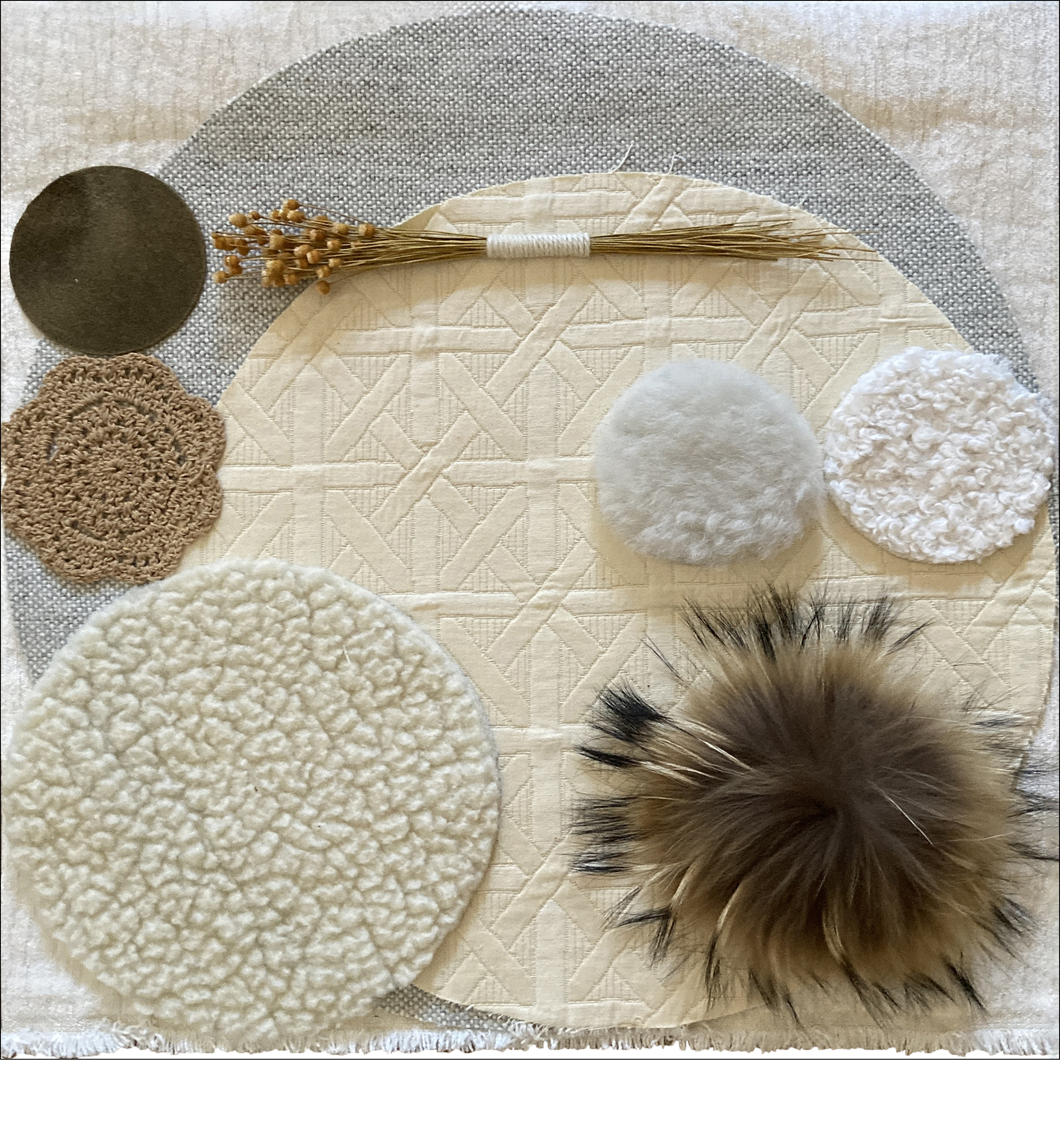
artwork info
textile assemblage (vintage Icelandic fur and suede, dried flowers, fabric)
18″H x 18″W
2025
$240
song info
category ▸ Rímur | epic tales sung as alliterative, rhyming ballads (usually a cappella) that can be traced back to the 14th century
text ▸ Davíð Stefánsson (from Fagraskógi)
music ▸ Jóhann Sveinsson (from Flögu, Eyjafirði)
listen here 🔈 https://tinyurl.com/4dz7d3ve
“Uppi í háa hamrinum” is a traditional ríma that tells the story of a widower from Álfahamri and his encounter with a hidden woman living in a high cliff. This ríma reflects Icelandic folklore themes, particularly the belief in huldufólk (hidden people) and their interactions with humans. The narrative emphasizes the mysterious allure of the hidden woman and the enigmatic disappearance of the widower, elements commonly found in Icelandic oral traditions. The poem is composed in the braghent meter, featuring alliteration and characterized by three-line stanzas, longer first lines with internal rhymes, and rhyming second and third lines. The performer here is Þuríður Friðriksdóttir (1887–1954).
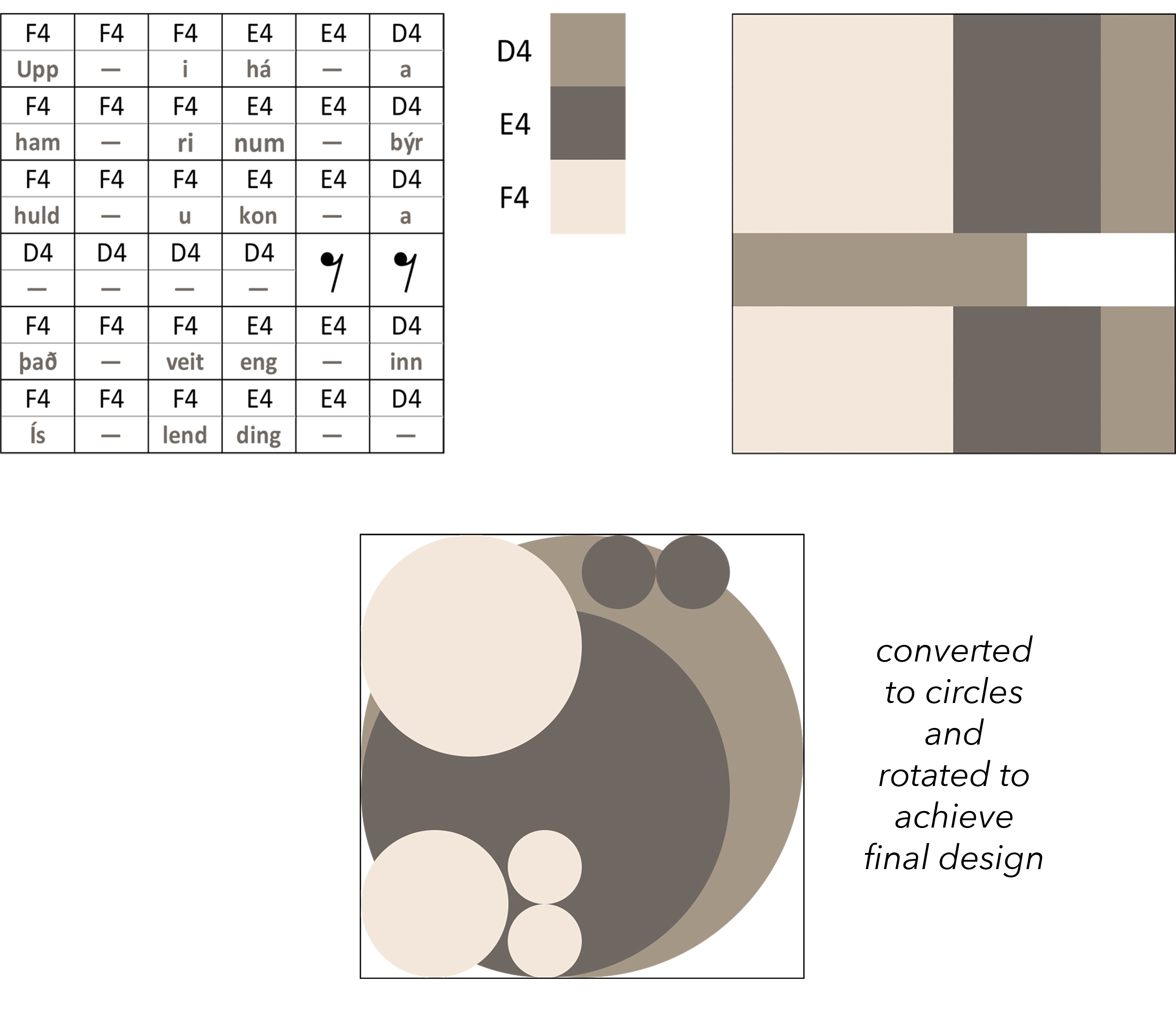
Uppi í háa hamrinum
Uppi í háa hamrinum býr huldukona;
það veit enginn Íslendingur
annar en ég, hvað vel hún syngur.
Eitt sinn hvarf hann, ekkillinn frá Álfahamri;
það var ekki allt með felldu,
eftir því sem sumir héldu.
Leitað var hans út með á og upp við hamra.
En allir höfðu öðru að sinna,
og ekkilinn var hvergi að finna.
Löngu seinna sauðamaður sagðist hafa
heyrt hann glöggt á hljóðri vöku
í hamrinum kveða þessa stöku.
English translation
Up in the high cliff
Up in the high cliff dwells a hidden woman;
no Icelander knows,
other than I, how well she sings.
Once, the widower from Álfahamri disappeared;
things were not all in order,
according to what some believed.
He was searched for along the river and up by the cliffs,
but everyone had other matters to attend to,
and the widower was nowhere to be found.
Long after, a shepherd claimed to have
heard him clearly during a quiet vigil
in the cliff, reciting this stanza.
Lyrics reproduced under fair use for artistic commentary.